

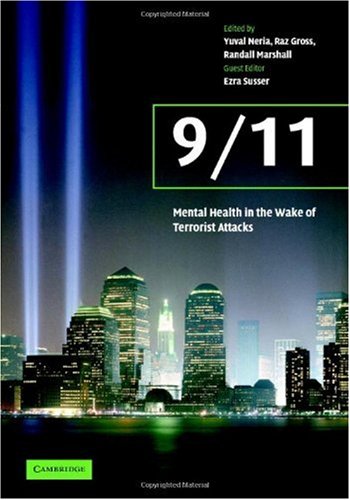
9 11 Mental Health in the Wake of Terrorist Attacks 1st Edition by Yuval Neria, Raz Gross, Randall Marshall 0511335091 9780521831918


Original price was: $50.00.$35.00Current price is: $35.00.
9/11 Mental Health in the Wake of Terrorist Attacks 1st Edition by Yuval Neria, Raz Gross, Randall Marshall – Ebook PDF Instant Download/Delivery: 0511335091, 9780521831918
Full download 9/11 Mental Health in the Wake of Terrorist Attacks 1st Edition after payment
Product details:
ISBN 10: 0511335091
ISBN 13: 9780521831918
Author: Yuval Neria, Raz Gross, Randall Marshall
9/11 Mental Health in the Wake of Terrorist Attacks 1st Table of contents:
Part I Introduction
1 Mental health in the wake of terrorism: making sense of mass casualty trauma
Contemporary terrorism: a psychological warfare
Individual and community sequelae of disaster trauma: vulnerability and resilience
Indirect exposure and post-disaster psychopathology
Post-disaster outreach and intervention
REFERENCES
Part II The psychological aftermath of 9/11
2 Preface
3 Post-traumatic stress symptoms in the general population after a disaster: implications for public
Introduction
Post-traumatic stress after disasters and after September 11, 2001
Study history and motivation
Choosing a research design
Funding
Methods
Sample
Survey instrument
Data presentation in this chapter
Results
Characteristics of sample
Prevalence of probable PTSD in the NYC metropolitan area
Symptoms of PTSD in the overall sample
Bivariate relations between demographic and event-exposure covariates and probable PTSD in the after
Discussion
Limitations
Directions for future research
Implications for mental health intervention in the post-disaster setting
REFERENCES
4 Coping with a national trauma: a nationwide longitudinal study of responses to the terrorist attac
Overcoming limitations in the study of adjustment to stressful events
Overview of methods
Data collection following 9/11/2001
Overview of analytic strategy
Immediate response data
Presence of posttraumatic stress symptoms
Predictors of posttraumatic stress symptoms
Predictors of global distress
Rates of stressful life events
Community comparisons on posttraumatic stress symptomatology
Parent?adolescent study findings
Acute stress response during the Iraq war
Summary
Acknowledgments
REFERENCES
5 An epidemiological response to disaster: the post-9/11 psychological needs assessment of New York
Introduction
Background
NYC BOE response to September 11, 2001
Partnership for recovery of New York City schools
Background to the needs assessment
Study considerations
Selecting the sample
The survey instrument
Data collection
Compliance
Approvals
Overview of initial findings
Public health implications
Limitations
Acknowledgment
REFERENCES
6 Historical perspective and future directions in research on psychiatric consequences of terrorism
Introduction
Historical perspective
PTSD epidemiology and disasters
Disaster research methods and diagnosis-focused investigation
The Oklahoma City bombing study: an empirical template for research
Translation of empirical data to policy and intervention
Critical comments on research methods of studies of the September 11th terrorist attacks
Ramifications of post-9/11 studies for subsequent research, intervention, and policy
Summary and conclusions
REFERENCES
7 Capturing the impact of large-scale events through epidemiological research
Introduction
Challenges in designing disaster studies
Assembling a research team
Timing
Exposure identification
Sample selection
Challenges in instrument selection
Diagnosis vs. symptom checklists
Challenges in executing disaster studies
Access to remote areas
Response rates
Informed consent
Challenges in the analytic phase
Power
Multiple comparisons
False positive and misleading inferences
Reporting mental health effects
Discussion
REFERENCES
8 Mental health research in the aftermath of disasters: using the right methods to ask the right que
Introduction
Population sampling
Choosing the right sample to ask the right questions
The relevance of different sampling strategies
Comparing data across studies
Comparing data within studies
Assessment methods
Rigorous adherence to DSM-IV nosology
Choice of screening instrument
Conclusion
REFERENCES
Part III Reducing the burden: community response and community recovery
9 Community and ecological approaches to understanding and alleviating postdisaster distress
Understanding the effects of disasters
Event and population dynamics
Community dynamics
Social dynamics
Ethno-cultural dynamics
Alleviating the effects of disaster
Acknowledgment
REFERENCES
10 What is collective recovery?
Principles of collective recovery
Principle 1: There is no ?there,? no ?them?
Principle 2: The collective is not the tribe
Principle 3: The injury is not solely to the self
Principle 4: The festival heals the collective
Putting collective recovery into action
Implications for research and practice
REFERENCES
11 Rebuilding communities post-disaster in New York
What happened on September 11th?
What is a keystone?
What happens when a keystone is eliminated?
How is interdependence to be expressed in a society of individualism and warring groups?
What is the ecosystems approach to healing?
Lower Manhattan post-catastrophe: the Ground Zero Initiative
Regional reconnections: NYC RECOVERS
NYCR Coordinating Team
Members of the alliance
The bowl of NYCR
Filling the bowl
The Walk to Honor and Heal
The Novena for Flight 587
The Luncheon of Champions
Together we heal: community mobilization for trauma recovery
Learning from each other
The barrier-free city
Battle fatigue
Healer, Heal Thyself
Conclusion
REFERENCES
12 Journalism and the public during catastrophes
Journalists? role
Public response
Adult survivors
Adult non-survivors
Mixed sample of survivors and non-survivors
Child survivors
Child non-survivors
Critique and summary of literature
Journalists as witnesses
Summary and future practice
Implications for public health workers
Implications for journalists
Implications for public
Final Remarks
REFERENCES
13 Effective leadership in extreme crisis
Describing reality and giving hope: Ken Chenault
Dissing your colleagues: Dr. Bernandine Healy
Primal leadership
Blamestorming: Rev. Jerry Falwell
From resonant to dissonant leadership and maybe back again: Howard Lutnick
From dissonant to resonant leadership: Rudy Giuliani
Great leaders are made not born
Concluding thought
REFERENCES
14 Guiding community intervention following terrorist attack
Need for a threat-loss-response model
COR theory and its application to community trauma
Protecting the most vulnerable
Principles of intervention in the community
Conclusion
REFERENCES
Part IV Outreach and intervention in the wake of terrorist attacks
15 Science for the community after 9/11
Two models of intervention
REFERENCES
Part IV A New York area
16 PTSD in urban primary care patients following 9/11
Introduction
Trauma and PTSD in primary care
Ethnicity, acculturation, and PTSD
Health utilization, trauma, and PTSD
Study design, recruitment, and sample characteristics
Study survey
Analytic strategy
Main findings
Sample characteristics and location during the attacks of 9/11/2001
PTSD and sociodemographic and exposure characteristics
Psychiatric comorbidity
Impairment, functioning, and health
Mental health treatment and utilization of medical services
Discussion
Limitations
Acknowledgements
REFERENCES
17 Project Liberty: responding to mental health needs after the World Trade Center terrorist attacks
Introduction
Historical perspective: long-term mental health impact
The mental health impact of the September 11th terrorist attacks
Project Liberty: New York State?s emergency mental health response program
Project Liberty goals and program principles
Public outreach and education efforts
Outreach to children
Linking to crisis counseling via LIFENET
Overview of Service Delivery
Demographic description of service recipients
High-risk groups
Reactions, symptoms, and probable disorders in service recipients
Project Liberty Evidence-Informed Enhanced Services
The Child and Adolescent Trauma Treatment Services program
Program evaluation
Challenges, lessons learned, and implications for policy development
Challenges posed in development and implementation
Lessons learned
Implications for mental health and homeland security policy
REFERENCES
18 Mental health services support in response to September 11: the central role of the Mental Health
LifeNet before the disaster
Partnering with government, agencies, and community at large
Promoting awareness through public education campaigns
Call volume pre-9/11
September 11, 2001: the immediate disaster response
Early hotline calls were typically related to basic needs
Emerging importance of coordinated mobilization of trained professionals
Resource needs become clear
LifeNet hotline expansion through the SEF
LifeNet as a centralized access vehicle for Project Liberty services
Project Liberty?s public education campaign
LifeNet call volume trends after 9/11
Media influences
Broad scale activating events
Temporal distance from the disaster
Other trends in LifeNet call data
Comparisons among the Asian, Spanish, and general LifeNet hotlines reveal some cultural differences
PTS and anxiety symptoms remain the principal concerns reported by callers
Outpatient service and Project Liberty service requests predominate
9/11 Mental health and substance abuse program
Portable benefit model chosen over grant funding
Eligibility and division of responsibility for victim population pursuant to Mitchell plan
Types of providers and services covered
Provider rate limits for services set per industry standards
Interaction with other benefits or insurance coverage
New technology developed to handle information management
Who has the program served?
Lessons learned in administering the 9/11 benefit program, thus far
Nimble, mid-course correction approaches are essential
Programs must address diverse culture needs vis ? vis outreach and actual services
Create a point-of-entry that is easily accessible
LifeNet?s CRC and the SEF?s training program
Setting up the skills training program
Addressing ?compassion fatigue?
Assessing the impact of the training program
Conclusion
Acknowledgments
REFERENCES
19 The New York Consortium for Effective Trauma Treatment
INTRODUCTION
Acknowledgments
THE NEW YORK TIMES COMPANY FOUNDATION
TRAUMA STUDIES AND SERVICES, THE NEW YORK STATE PSYCHIATRIC INSTITUTE, COLUMBIA UNIVERSITY COLLEGE O
The first few weeks
Creating the Consortium
Enhancing expertise in trauma treatment
Developing a focus on training
Developing a state-of-the-art training program
Results of the training project
Other beneficial consequences of the Consortium project
Conclusions
ST. VINCENT CATHOLIC MEDICAL CENTERS OF NEW YORK, BEHAVIORAL HEALTH SERVICES AND NEW YORK MEDICAL CO
REFERENCES
NEW YORK UNIVERSITY CHILD STUDY CENTER, NEW YORK UNIVERSITY SCHOOL OF MEDICINE
First response: consultation, education and support of the community
Second response: training the mental health community
Third response: implementation of mental health services
Characteristics of persons seeking treatment at NYU
Outcomes in the adaptation of a treatment to the community it served
About the service providers
REFERENCE
THE MENTAL HEALTH MANDATE OF SEPTEMBER 11, MOUNT SINAI SCHOOL OF MEDICINE
CONCLUSION
20 Evaluation and treatment of firefighters and utility workers following the World Trade Center att
Post-traumatic stress disorder and DRWs
Assessment of disaster workers
Treatment of disaster workers
Organizational interventions
Summary
The Weill Cornell Disaster Relief Screening and Treatment Program
Establishing the screening program
Clinical presentation of the DRW common symptomatic presentations
Co-morbid diagnoses
Common problems consequent to trauma and PTSD
Effects on interpersonal lives
Effects on work performance
Treatment and the therapeutic alliance
An active approach
Useful modifications to the therapeutic stance
Conclusions
REFERENCES
21 The World Trade Center Worker/Volunteer Mental Health Screening Program
The traumatic exposure
Mental health sequelae in relief and recovery workers
Experiences of salvage, volunteer, and rescue workers at Ground Zero
Motivations for being at the site
Dosing: degree and type of exposures
Identification with the victims
Subjective individual experiences of the site
Complex effects on support networks
Development of the Mental Health Screening Program
Program design
Operation of the MHSP
Preliminary findings
Case examples
Conclusion
REFERENCES
22 Child and adolescent trauma treatments and services after September 11: implementing evidence-bas
Introduction
CATS overview
Modeling evidence-based service delivery post-disaster
Assessment
Implementation obstacles: measurement tools
Treatment
Implementation obstacles: engagement, outreach, recruitment
Implementing obstacles: training
Overview of data collection
Data report
Measures
Conclusions
REFERENCES
23 Relationally and developmentally focused interventions with young children and their caregivers i
Introduction
Historical overview of understanding trauma in a relational context
Manifestations of PTSD in children
Contemporary models of PTSD in young children: relational PTSD
Relationship between parental and family functioning and child outcome
Guidelines for working with children after acute disaster
Psychological mooring: clinical work at the Kids Corner at Pier 94
Guidelines for working with caregivers and young children after disaster strikes
Guidelines for children
Listen
Clarify
Facilitate
Support the capacity to imagine repair
Support attachment bonds
Guidelines for parents
Contextualize the parents? reactions
Support the child?s surviving attachment relationships
Clarify
Case illustrations
The case of Maria
The case of Abbey
Discussion
Relationally and developmentally informed community interventions post-9/11
Conclusion
REFERENCES
Part IV B Washington, DC
24 The mental health response to the 9/11 attack on the Pentagon
Introduction
Part I: The immediate response
September 11, 2001
The days and weeks after the attack
The Family Assistance Center
Therapeutic activities
Issues about stigma and research
Part II: The long-term response: Operation Solace
Activities of OPSOL: challenges and solutions
Availability
Perception
Care delivery model
Psychological sequelae
Conclusion
REFERENCES
25 Learning lessons from the early intervention response to the Pentagon
What happened and how can we maximize the lessons learned?
Final remarks
REFERENCES
Part IV C Prolonged-exposure treatment as a core resource for clinicians in the community: dissemina
26 Psychological treatments for PTSD: an overview
Historical background of treatments for PTSD
Current status of psychosocial treatments for chronic PTSD
?Conventional? CBT programs
Exposure therapy
Stress inoculation training (SIT)
Cognitive therapy
Unconventional? exposure and cognitive therapy programs
How can we create order out of the present chaos?
Current status of psychosocial treatments for the prevention of chronic PTSD
Psychological debriefing
Brief CBT
Discussion
REFERENCES
27 Dissemination of prolonged exposure therapy for posttraumatic stress disorder: successes and chal
Description of prolonged exposure
Efficacy of prolonged exposure and related programs for chronic PTSD
Prevention of chronic PTSD/treatment of acute stress disorder
Availability of exposure therapy: the need for and barriers to dissemination
Evaluating the safety of exposure therapy for PTSD
Evaluating efforts to disseminate CBT for PTSD
Model I: Intensive initial training of therapists followed by ongoing expert supervision
Model II: Intensive initial training of therapists and a local supervisor
Summary and conclusions
REFERENCES
28 Mental health community response to 9/11: training therapists to practice evidence-based psychoth
Introduction
The evidence-based mental health paradigm
CBT for PTSD: what it is and what clinicians think of it
Dissemination to achieve clinician behavior change: teaching psychotherapy in a 2-day workshop
Attitudes, skills, and motivation: what changes with training
Future directions and research agendas
REFERENCES
Part V Disasters and mental health: perspectives on response and preparedness
29 The epidemiology of 9/11: technological advances and conceptual conundrums
September 11, 2001: the mental health crisis that wasn?t
What counts as ?exposure? to trauma?
Resilience?
Conclusions
REFERENCES
30 Searching for points of convergence: a commentary on prior research on disasters and some communi
REFERENCES
31 What mental health professionals should and should not do
Introduction
Symptoms are not disorders
The seductions of screening and the disappointment of debriefing
The rules of screening
Screening: a lesson from history
Questions that must be answered before we can recommend screening for psychological vulnerability or
Choices of measures
Screening and treatment
Is it effective?
The disappointments of debriefing
That?s all very well, but?
It?s all over ? now what?
Conclusions
Suggested policy framework for planners/crisis managers/local authorities concerning the mental heal
REFERENCES
32 Coping with the threat of terrorism
What is terrorism?
The psychological burden of terrorism
Coping with uncertain future threats
Coping with the threat of terrorism internationally
Children and coping with terrorism
Appraisal-tendency theory
Situational determinants of threat appraisal
Implications and suggestions for future research
A working conceptual framework
Summary
REFERENCES
33 Life under the ?new normal?: notes on the future of preparedness
Introduction
The future of preparedness: challenges and strategies
Define ?prepared? and establish preparedness benchmarks
Manage the bureaucracy
Monitor dual use and trade-offs
Address bioethical and legal ramifications of preparedness
Ensure future workforce
Engage local communities in emergency preparedness planning
Improve understanding of the psychological and behavioral ramifications of terrorism
Conclusions
REFERENCES
34 Lessons learned from 9/11: the boundaries of a mental health approach to mass casualty event
Introduction
Uniqueness of the 9/11 experience
The search for clients
The search for relevant measures
The half-full ? half-empty glass
Where has 9/11 found psychiatry (and mental health in general)?
Concluding comments
REFERENCES
35 Learning from 9/11: implications for disaster research and public health
The psychological aftermath of 9/11
Reducing the burden: community response and community recovery
Outreach and intervention in the wake of terrorist attacks
Lessons for communities confronting large-scale disasters
The role of the media as vehicle for exposure
Perspectives on 9/11 from outside the affected community
REFERENCES
People also search for 9/11 Mental Health in the Wake of Terrorist Attacks 1st:
psychological effects of 9/11
terrorism and mental health
PTSD after terrorist attacks
disaster mental health studies
trauma and recovery research
Tags: Mental Health, the Wake, Terrorist Attacks, Yuval Neria, Raz Gross, Randall Marshall