

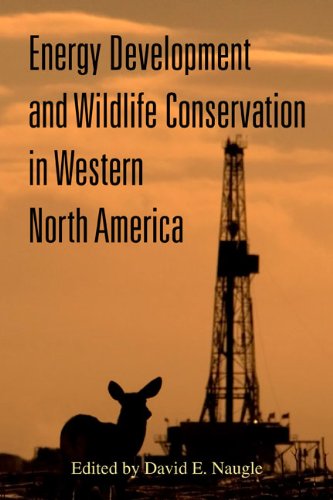
Energy Development and Wildlife Conservation in Western North America 2nd Edition by David Naugle ISBN 1597266582 978-1597266581


Original price was: $50.00.$35.00Current price is: $35.00.
Energy Development and Wildlife Conservation in Western North America 2nd Edition by David Naugle – Ebook PDF Instant Download/Delivery: 1597266582, 978-1597266581
Full download Energy Development and Wildlife Conservation in Western North America 2nd edition after payment
Product details:
ISBN 10: 1597266582
ISBN 13: 978-1597266581
Author: David Naugle
Energy Development and Wildlife Conservation in Western North America offers a road map for securing our energy future while safeguarding our heritage.
Contributors show how science can help craft solutions to conflicts between wildlife and energy development by delineating core areas, identifying landscapes that support viable populations, and forecasting future development scenarios to aid in conservation design. The book
- frames the issue and introduces readers to major types of extraction
- quantifies the pace and extent of current and future energy development
- provides an ecological foundation for understanding cumulative impacts on wildlife species
- synthesizes information on the biological response of wildlife to development
- discusses energy infrastructure as a conduit for the spread of invasive species
- compares impacts of alternative energy to those of conventional development
The final section calls for a shift away from site-level management that has failed to mitigate cumulative impacts on wildlife populations toward broad-scale planning and implementation of conservation in priority landscapes. The book concludes by identifying ways that decision makers can remove roadblocks to conservation, and provides a blueprint for implementing conservation plans. Energy Development and Wildlife Conservation in Western North America is a must-have volume for elected officials, industry representatives, natural resource managers, conservation groups, and the public seeking to promote energy independence while at the same time protecting wildlife.
Energy Development and Wildlife Conservation in Western North America 2nd Table of contents:
PART I – Energy Development and the Human Footprint
Chapter 1 – Introduction to Energy Development in the West
Chapter 2 – Geography of Energy Development in Western North America: Potential Impacts on Terrestrial Ecosystems
Major Energy Sources
Cumulative Impacts of Energy Development on Terrestrial Ecosystems
Conclusion
PART II – Biological Response of Wildlife and Invasive Plants to Energy Development
Chapter 3 – Unifying Framework for Understanding Impacts of Human Developments on Wildlife
A Typology for Wildlife Impact Research: The Framework
Biological Scale of Impacts: A Review
Assessing Impacts: Choosing Methods and Scales
Conclusion
Chapter 4 – Sage-Grouse and Cumulative Impacts of Energy Development
Biological Response of Sage-Grouse to Energy Development
A Shifting Paradigm: Business as Usual versus Landscape Conservation
Conservation Planning Using Core Areas to Reduce Impacts
Off-Site Mitigation for Impacts Resulting from Development
Conclusion
Acknowledgments
Chapter 5 – Effects of Energy Development on Ungulates
Biological Response of Ungulates to Energy Development
Discussion
Conclusion
Chapter 6 – Effects of Energy Development on Songbirds
Bird Mortality and Energy Infrastructure
Dissection and Perforation of the Boreal Frontier
Avian and Human Perspectives on Energy Sector Activity in Remnant Grasslands
The Emerging Issue of Noise
Conclusion
Chapter 7 – Invasive Plants and Their Response to Energy Development
Patterns of Plant Invasions
Impacts on Ecosystem Processes
Case Study: Energy Development in Sagebrush Grasslands
Implications for Managing Energy Development
Conclusion
Chapter 8 – Wind Power and Biofuels: A Green Dilemma for Wildlife Conservation
Wind Energy and Wildlife Conservation
Biofuels: Boon or Bane for Grassland Wildlife?
Conclusion
PART III – Conservation by Design: Planning and Implementing Solutions
Chapter 9 – Energy by Design: Making Mitigation Work for Conservation and Development
Environmental Impact Assessment and the Mitigation Hierarchy
Step 1. Develop a Landscape Conservation Plan
Step 2. Blend Landscape Planning with the Mitigation Hierarchy
Step 3. Determine Residual Impacts and Select the Optimal Offset Portfolio
Step 4. Estimate Offset Contribution to Conservation Goals
Conclusion
Chapter 10 – Forecasting Energy Development Scenarios to Aid in Conservation Design
Forecasting Oil and Gas Potential
Implications from Buildout Scenarios
Conclusion
Acknowledgments
Chapter 11 – Resource Policy, Adaptive Management, and Energy Development on Public Lands
Adaptive Management and Energy Development on Public Lands
The Mineral Leasing Act and the Capacity to Adapt
Collaborative Engagement on Public Lands
Making Adaptive Management the New Paradigm on Public Lands
Conclusion
Chapter 12 – Community-Based Landscape Conservation: A Roadmap for the Future
Strategic Landscape Conservation: Working in the Right Places
The Social Framework: Working with the Right People
Conservation Delivery: Designing the Right Projects
Monitoring and Evaluation: A Fine Line between Success and Failure
The Upshot: Energy Development and Community-Based Landscape Conservation
People also search for Energy Development and Wildlife Conservation in Western North America 2nd :
wind energy development and wildlife conservation challenges and opportunities
energy development and wildlife conservation in western north america
wildlife conservation and solar energy development in the desert southwest
energy conservation policy
energy conservation jobs
Tags: David Naugle, Energy Development, Wildlife Conservation, North America