

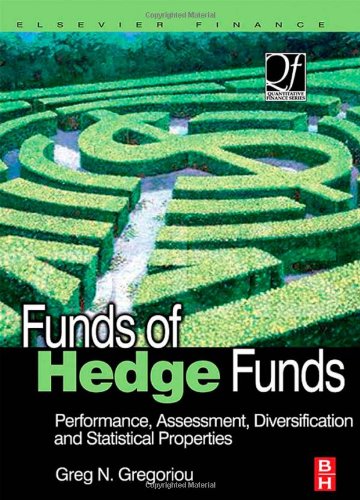
Funds of Hedge Funds Performance Assessment Diversification and Statistical Properties Quantitative Finance 1st Edition by Greg Gregoriou ISBN 0750679840 9780750679848


Original price was: $50.00.$35.00Current price is: $35.00.
Funds of Hedge Funds Performance Assessment Diversification and Statistical Properties Quantitative Finance 1st Edition by Greg Gregoriou – Ebook PDF Instant Download/Delivery: 0750679840 , 9780750679848
Full download Funds of Hedge Funds Performance Assessment Diversification and Statistical Properties Quantitative Finance 1st edition after payment
Product details:
ISBN 10: 0750679840
ISBN 13: 9780750679848
Author: Greg Gregoriou
With about $450 billion in assets, funds of hedge funds are the most recent darling of investors. While hedge funds carry high risk for the promise of high returns they are designed for the very rich and for large institutional investors such as pension funds. A Fund of Hedge Funds (FOF) spreads investments among a number of hedge funds to reduce risk and provide diversification, while maintaining the potential for higher than average returns. Odds are that some pension fund of yours is invested heavily in these products, and more recently these FOFs have been opened to more and more individual investors in offshore jurisdictions with lower minimum entry levels. Since this is a new and extremely fast-moving financial phenomenon, academic research has just begun in earnest, and this is the first book to present rigorous academic research by some of the leading lights in academic finance, carefully analyzing the broad array of issues involved in FOFs.
* With over $450 billion in assets, hedge funds of funds are the darling of investors
* First book to present rigorous academic research about funds of funds
* Leading lights in academic finance from around the world analyze the broad array of issues involved in funds of funds
Funds of Hedge Funds Performance Assessment Diversification and Statistical Properties Quantitative Finance 1st Table of contents:
Part One: Performance
1 Rank alpha funds of hedge funds
1.1 Introduction
1.2 Hedge fund data and biases
1.3 Factor models for hedge funds
1.4 Model estimation
1.5 Rank alpha
1.6 Optimizing funds of hedge funds
1.7 Cleaning the covariance matrix
1.8 Performance analysis of rank alpha portfolios
1.9 Conclusion
References
2 Funds of hedge funds: bias and persistence in returns
2.1 Introduction
2.2 Database
2.3 Methodology
2.4 Descriptive statistics
2.5 Bias analysis
2.6 Persistence in performance
2.7 Conclusion
References
3 Replication and evaluation of funds of hedge funds returns
3.1 Introduction
3.2 The KP efficiency measure
3.3 Evaluation results
3.4 Distributional analysis
3.5 Conclusion
References
4 Performance, size, and new opportunities in the funds of hedge funds industry
4.1 Introduction
4.2 Experimental framework
4.3 Factor model for fund of funds
4.4 Sample formation
4.5 Performance decomposition of FOF portfolios
4.6 Principal components of FOF returns
4.7 Conclusion
References
5 Optimal fund of funds asset allocation: hedge funds, CTAs, and REITs
5.1 Introduction
5.2 Data
5.3 Methodology
5.4 Results
5.5 Conclusion
References
6 The changing performance and risks of funds of funds in the modern period
6.1 Characteristics of funds of funds
6.2 Comparing returns: funds of funds vs. hedge funds
6.3 Ancient history vs. modern history: LTCM as the defining moment
6.4 Factor analysis of returns
6.5 The future of funds of funds
References
7 Hedge fund indices: Are they cost-effective alternatives to funds of funds?
7.1 Introduction
7.2 Funds of funds
7.3 Investable hedge fund indices
7.4 Distribution of returns and potential biases
7.5 Asset-based style factors
7.6 Mean excess return and Sharpe ratio comparisons
7.7 Fung and Hsieh model alphas and information ratio comparisons
7.8 Correlation with traditional asset returns and lagged equity return comparisons
7.9 Conclusion
References
8 Simple hedge fund strategies as an alternative to funds of funds: evidence from large-cap funds
8.1 Introduction
8.2 Data
8.3 Methodology
8.4 Empirical results
8.5 Conclusion
References
Part Two: Diversification, Selection, Allocation, and Hedge Fund Indices
9 Funds of funds of hedge funds: welcome to diworsification
9.1 Introduction
9.2 The art and science of diversification
9.3 Analysis
9.4 Diversification results
9.5 How about the fees?
9.6 Conclusion
References
10 Style analysis of funds of hedge funds: measurement of asset allocation and style drift
10.1 Introduction
10.2 Sharpe’s model for style analysis
10.3 Data set
10.4 Hedge fund classification
10.5 Accuracy of Sharpe’s model
10.6 Measuring the style drift
10.7 Conclusion
References
Appendix
11 Gains from adding funds of hedge funds to portfolios of traditional assets: an international pers
11.1 Introduction
11.2 Data
11.3 Method
11.4 Results
11.5 Conclusion
References
12 Tactical asset allocation for hedge fund indices at one- to six-month horizons
12.1 Introduction
12.2 The model
12.3 The results
12.4 Conclusion
References
13 Single-strategy funds of hedge funds: How many funds?
13.1 Introduction
13.2 Decomposition
13.3 Conclusion
References
Part Three: Construction and Statistical Properties of Funds of Hedge Funds
14 Distributional characteristics of funds of hedge funds returns
14.1 Introduction
14.2 Hedge funds: background
14.3 Testing for normality
14.4 Data and summary performance information
14.5 Results
14.6 Conclusion
References
15 Funds of funds and the diversification effect
15.1 Introduction
15.2 Mean-variance spanning tests
15.3 Data description
15.4 Empirical results
15.5 Conclusion
References
Appendix
16 Higher-moment performance characteristics of funds of funds
16.1 Introduction
16.2 Performance assessment basics
16.3 Data and methodology
16.4 Performance characteristics of funds of funds
16.5 Enhancing FOF performance
16.6 Results
16.7 Conclusion
References
17 The market risk of funds of hedge funds: a conditional approach
17.1 Introduction
17.2 Estimation of the regimes for the core assets
17.3 Implications for hedge funds returns modeling
17.4 An application to stress testing
17.5 Conclusion
References
18 Revisiting the Fama and French model: an application to funds of funds using nonlinear methods
18.1 Introduction
18.2 Methodology
18.3 Data
18.4 Results
18.5 Conclusion
References
19 Investor’s choice: an investor-driven, forward-looking optimization approach to fund of hedge fun
19.1 Introduction
19.2 Data set: defining market patterns
19.3 Methodology: investor-driven objectives and the optimization algorithm
19.4 Empirical analysis: exhibiting the new degrees of freedom
19.5 Conclusion
References
Part Four: Monitoring Risk, Overview of Funds of Funds, Due Diligence, and Special Classes of Funds
20 Moments analysis in risk and performance monitoring of funds of hedge funds
20.1 Introduction
20.2 Funds of hedge funds
20.3 Investing in funds of hedge funds: a practical approach
20.4 Data description, empirical analysis, and results
20.5 Analysis of trade-off
20.6 Conclusion
References
21 An overview of funds of hedge funds
21.1 Introduction
21.2 Creating a portfolio of hedge funds
21.3 Ongoing portfolio management
21.4 Returning to the problem of the individual investor
21.5 Tracking funds of funds
21.6 Conclusion
References
22 Institutional investment due diligence on funds of hedge funds
22.1 Introduction
22.2 The gap: fiduciary responsible investing vs. private client products
22.3 Exploring institutional fiduciary responsibility
22.4 Exploring fiduciary responsibility: what IBM has that the average hedge fund of funds needs to
22.5 Conclusion
References
23 Synthetic collateralized debt obligations (CDO) squares and the continuing evolution of funds of
23.1 Introduction
23.2 Development of synthetic CDO squares
23.3 Structure of synthetic CDO squares
23.4 Recharacterization risk
23.5 Conclusion
References
24 Natural resources funds of funds: active management, risk management, and due diligence
24.1 Introduction
24.2 Emerging demand for natural resources investments
24.3 Diversified, active-management opportunities in natural resources investing
24.4 Risk management in natural resources futures trading
24.5 Due diligence in natural resources fund of funds investing
24.6 Conclusion
References
25 Identifying and monitoring risk in a fund of hedge funds portfolio
25.1 Introduction
25.2 Diversification and overdiversification
25.3 Liquidity
25.4 Transparency
25.5 Factor and impact analysis
25.6 Conclusion
References
26 The wizardry of analytics for funds of funds
26.1 Introduction: If only I had good risk analytics
26.2 You’re not in Kansas anymore
26.3 Click your heels and say “There’s nothing like diversification”
26.4 We’re off to see the wizard
26.5 The man behind the curtain
26.6 Follow the yellow brick road
26.7 Conclusion: You’re never going back to Kansas
References
27 Quantitative hedge fund selection for funds of funds
27.1 Introduction
27.2 Indicators for hedge fund selection
27.3 Data
27.4 Empirical results
27.5 Conclusion
People also search for Funds of Hedge Funds Performance Assessment Diversification and Statistical Properties Quantitative Finance 1st :
hedge fund of funds performance
funds of hedge funds list
funds of hedge funds
hedge funds performance
hedge fund performance measurement