

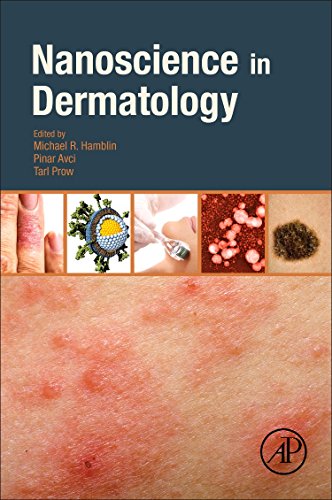
Nanoscience in Dermatology 1st Edition by Michael Hamblin, Pinar Avci, Tarl Prow 9780128029459 0128029455

Original price was: $50.00.$35.00Current price is: $35.00.
Nanoscience in Dermatology 1st Edition by Michael Hamblin, Pinar Avci, Tarl Prow – Ebook PDF Instant Download/Delivery: 9780128029459, 0128029455
Full download Nanoscience in Dermatology 1st Edition after payment
Product details:
ISBN 10: 0128029455
ISBN 13: 9780128029459
Author: Michael R. Hamblin, Pinar Avci, Tarl W. Prow
Nanoscience in Dermatology covers one of the two fastest growing areas within dermatological science, nanoscience and nanotechnology in dermatology. Recently, great progress has been made in the research and development of nanotechnologies and nanomaterials related to various applications in medicine and, in general, the life sciences. There is increasing enthusiasm for nanotechnology applications in dermatology (drug delivery, diagnostics, therapeutics, imaging, sensors, etc.) for understanding skin biology, improving early detection and treatment of skin diseases, and in the design and optimization of cosmetics.
Light sensitive nanoparticles have recently been explored, opening a new era for the combined applications of light with nanotechnology, also called photonanodermatology. However, concerns have been raised regarding the adverse effects of intentional and unintentional nanoparticle exposure and their toxicity.
Written by experts working in these exciting fields, this book extensively covers nanotechnology applications, together with the fundamentals and toxicity aspects. It not only addresses current applications of nanotechnology, but also discusses future trends of these ever-growing and rapidly changing fields, providing scientists and dermatologists with a clear understanding of the advantages and challenges of nanotechnology in skin medicine.
- Provides knowledge of current and future applications of nanoscience and nanotechnology in dermatology
- Outlines the fundamentals, methods, toxicity aspects, and other relevant aspects for nanotechnology based applications in dermatology
- Coherently structured book written by experts working in the fields covered
Table of contents:
Chapter 1: Anatomy and Function of the Skin
Chapter 2: Fundamentals of Nanoscience (and Nanotechnology)
Chapter 3: An Overview of Nanomaterials in Dermatology
Chapter 4: Clinical Impact and Patient Safety: The Potential of Microneedles in Changing the Form and Perception of Transdermal Drug Delivery
Chapter 5: Inorganic Nanoparticles for Transdermal Drug Delivery and Topical Application
Chapter 6: Biodegradable, Biocompatible, and Bioconjugate Materials as Delivery Agents in Dermatology: Safe Drug Delivery to Skin
Chapter 7: Peptide Dendrimers in Delivery of Bioactive Molecules to Skin
Chapter 8: Insights Into Interactions of Gold Nanoparticles With the Skin and Potential Dermatological Applications
Chapter 9: Formulation Effects on Topical Nanoparticle Penetration
Chapter 10: Nitric Oxide–Releasing Nanoparticles as an Antimicrobial Therapeutic
Chapter 11: Nanoparticles in the Topical Treatment of Cutaneous Leishmaniasis: Gaps, Facts, and Perspectives
Chapter 12: Nanotechnology-Based Nano-Bullets in Antipsoriatic Drug Delivery: State of the Art
Chapter 13: Nanoparticles for Treatment of Atopic Dermatitis
Chapter 14: Challenges and Opportunities of Nanoparticle-Based Theranostics in Skin Cancer
Chapter 15: Nanodelivery of Anticancer Agents in Melanoma: Encouraging, But a Long Way to Go
Chapter 16: Targeted Nanoparticles for Drug Delivery to Melanoma: From Bench to Bedside
Chapter 17: The Potential for Metal Nanoparticle-Enhanced Radiotherapy in Dermatology
Chapter 18: Nanotechnology in Photoprotection
Chapter 19: Nanoemulsions to Prevent Photoaging
Chapter 20: Decoupling Hazard From Risk in Using Sunscreens Containing Metal Oxide Nanoparticles
Chapter 21: Nanoparticle Oxygen Sensing in Skin
Chapter 22: Investigating the Intracellular Dynamics of Hypericin-Loaded Nanoparticles and Polyvinylpyrrolidone-Hypericin by Image Correlation Spectroscopy
Chapter 23: Accelerated Wound Healing Using Nanoparticles
Chapter 24: Quantum Dot Migration Through Natural Barriers and Distribution in the Skin
Chapter 25: Nanomedicines for the Eye: Current Status and Future Development
Chapter 26: Bioinspired Nanotechnologies for Skin Regeneration
Chapter 27: Imaging Nanoparticle Skin Penetration in Humans
Chapter 28: EGF-Loaded Nanofibers for Skin Tissue Engineering
People also search:
nanoscience in dermatology
nano dermatology
nanotechnology in skin care
nanoscience degree
basic science dermatology
Tags: Michael Hamblin, Pinar Avci, Tarl Prow, Nanoscience